This week’s reflective blog post will act as an update on our group’s museum photogrammetry project. Earlier today, my groupmate and I headed over to the Perlman Teaching Museum Classroom to photograph our assigned artifact. Our artifact was a patterned neolithic jar with two small handles on either side. There were two bright lights staged on either side of the artifact, and the jar was positioned on a pedestal for picture-taking purposes. We took around ninety photos of our artifact, making sure to get shots from multiple angles and views. We also took care to photograph shadowed spots and details in the jar’s pattern. Hopefully, we will be able to generate a realistic model of our artifact because of the quantity and variety of photos we took. Here are some photos we took from today’s session.
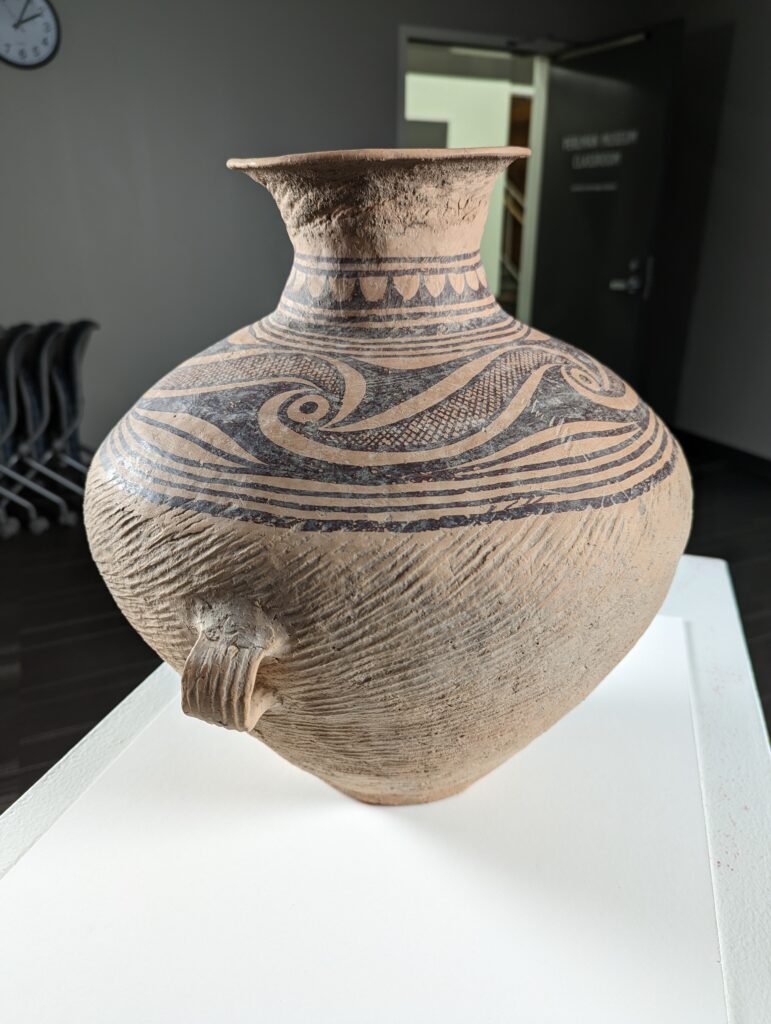
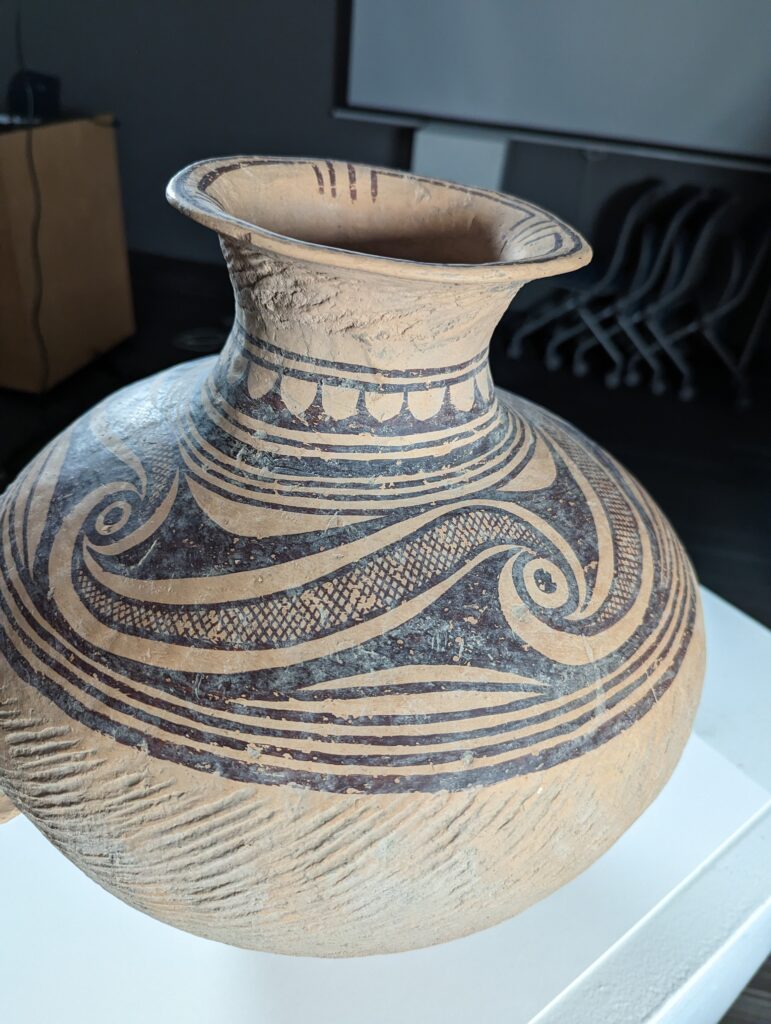
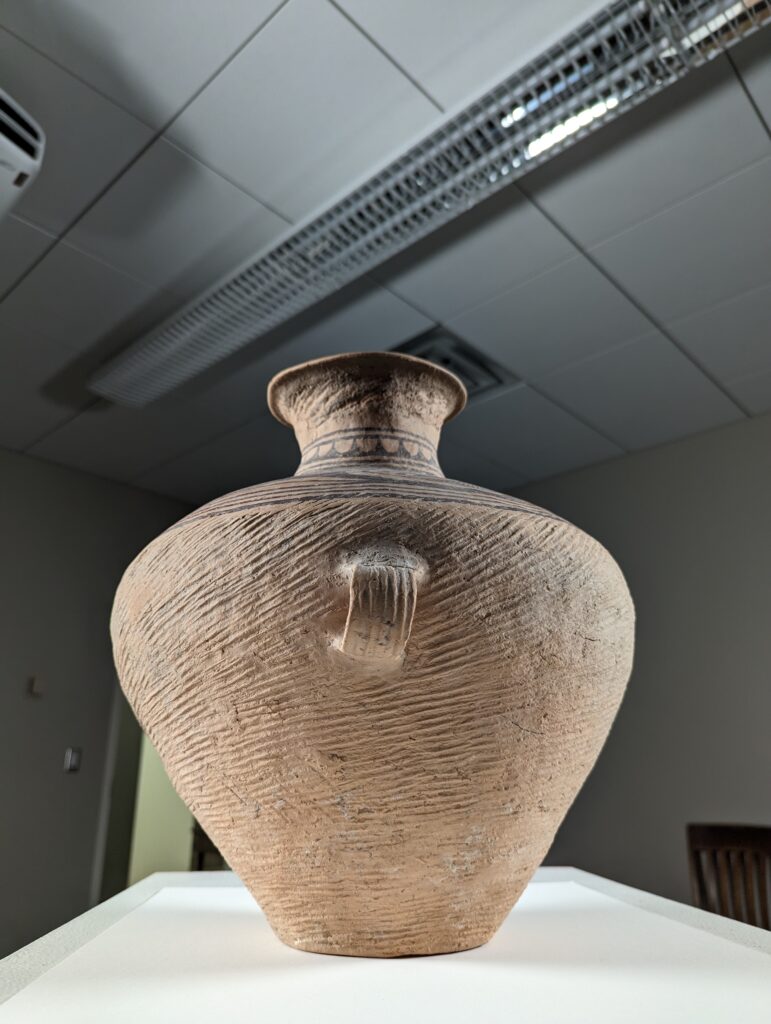
How does attempting to model an object compare to simply viewing one in an exhibition?
When you model an object, you are forced to spend a lot of time with it. You have to investigate its every groove, marking, and curve. You have to look so closely at it that you notice things you might not have if you encountered it from behind a glass case in an exhibition. When you attempt to model an object, the details and anatomy of the object will stick in your mind, whereas if you saw it in an exhibition, you might forget about it the moment you move on to another gallery.
How does moving from passive observer to active modeler change your thinking on communicating about art and history to various publics?
Moving from passive observer to active modeler makes me think about how much more engaging learning about art and history could be if it was presented in a hands-on, non-lecture format. Personally, experiencing history and art in a sensory way makes me much more likely to be curious and invested in what I am learning, and it also makes me more likely to remember what I learned. This reminds me of the Virtual Angkor project, which I analyzed in a previous post. If a project like Virtual Angkor had been included in my history curriculum growing up, there is no way I would have found myself struggling to stay engaged with material in my history classes. Instead, I would have been fascinated by how the project quite literally immerses the viewer in ancient Cambodia, complete with animated characters and historically-accurate audio. The move from passive observer to active modeler makes me realize that interactivity is a key element to any good digital humanities project.
Hi Maddy,
Your comment about moving from passive observer to active modeler really resonated with me. I think having a more interactive and engaging way of learning arts and history really puts in perspective about the time period, how advanced the civilization was, and the true craftsmanship behind the object.